Python for AI Beginners — Free Learning Path
Python for AI beginners: a free path from basics to prompts and simple scripts. Learn only the Python you need for AI work.
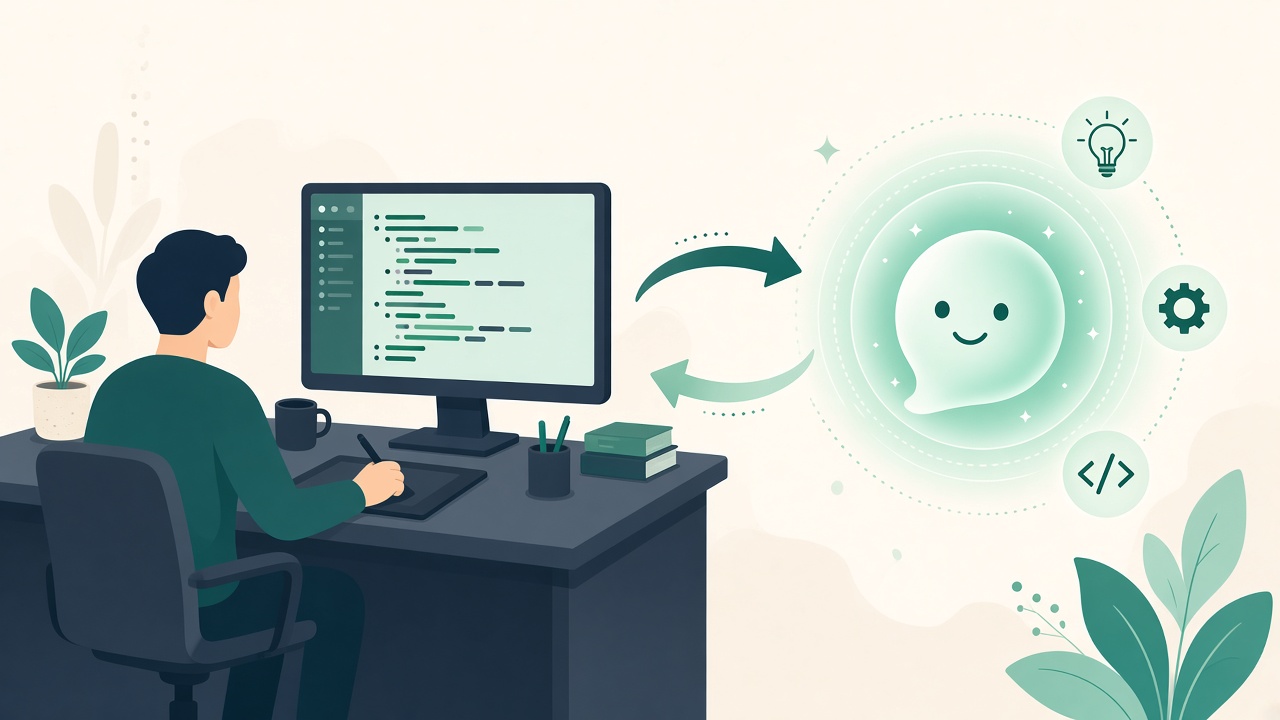
How Much Python Do You Need for AI?
When Nina’s team said “just call the API,” she stared at a Python file full of imports she did not recognize. She did not need a machine learning PhD — she needed functions, dictionaries, and courage to run a ten-line script. Python for AI beginners is narrower than the internet implies.
You don’t need all of Python to start AI. Focus on variables, functions, lists/dicts, files, and HTTP requests. That covers prompting scripts, simple evaluations, and API calls.
Why Python for AI beginners Matters
Bridges coding tutorials and AI hubs — strong internal-link glue for Python + AI keywords.
The Story Behind Python for AI beginners
The minimum viable Python for GenAI work
Most generative AI application roles are prompt + API + light Python — not training transformers from scratch. You need variables, functions, lists and dicts, reading files, environment variables for keys, and HTTP requests.
Skip deep object-oriented design and competitive programming at first. Add NumPy or pandas when a project truly requires data wrangling — not because a syllabus said week three.
Python for AI beginners is a means to express workflows: fill templates, loop over evaluation sets, log outputs, score them with a rubric. That scriptable mindset connects prompting to engineering.
From syntax tutorials to your first API call
Complete beginner Python tutorials on Sturdee through functions and dictionaries. Write a script that formats a prompt template with f-strings or a small helper function — no API yet.
Introduce virtual environments and `.env` files for API keys. Never commit secrets; never paste keys into chat tools.
Call a model API once with a hard-coded prompt. Print the response. Celebrate — you just demystified half the products you use daily.
- Functions and arguments
- JSON-like dicts for structured data
- Environment variables for secrets
- Simple loops over ten test inputs
- Save outputs to a CSV for review
Evaluation loops beat toy hello-worlds
Loop ten test inputs through your template and save outputs. Score each with a simple rubric: format OK? tone OK? factual flags? Manual scoring teaches you what later automation must detect.
When something fails, fix the prompt before fixing the code — unless the bug is clearly syntax or HTTP. Most beginner pain is specification, not Python.
Use AI Tutor on Pro to debug tracebacks: read the error bottom-up, hypothesize, patch one line, rerun. That habit transfers to every stack you will touch.
Python versus JavaScript and when math enters
Choose Python if you want the default AI/ML ecosystem and simpler scripts. Choose JavaScript if you already ship web apps and want AI features beside your frontend.
Machine learning math becomes relevant when you fine-tune, train, or research — not when you orchestrate APIs and retrieval. Learn math on demand.
Follow /tutorials/python, then apply skills in AI paths on Sturdee. Your next milestone is a README explaining what your script does, how to run it, and how you evaluated outputs.
Python Basics That Matter for AI
- Functions and arguments
- JSON dicts for structured data
- Reading env vars for API keys
- Simple loops for evaluation sets
- Virtual environments for dependencies
Free Python → AI Path
- Complete beginner Python tutorials (syntax)
- Write a script that formats a prompt template
- Call a model API with one request
- Loop 10 test inputs and save outputs
- Score outputs with a simple rubric
Tiny Python Script for Prompt Practice
def fill_prompt(role: str, task: str, user_input: str) -> str:
    return (
        f"You are {role}.\n"
        f"Task: {task}\n"
        f"User input:\n{user_input}\n"
    )

print(fill_prompt("a patient tutor", "Explain recursion simply", "What is recursion?"))
Free Python Tutorials on Sturdee
Follow /tutorials/python, then apply skills in AI paths. Use AI Tutor when debugging scripts (Pro).
Takeaways — What to Do Next
Python for AI beginners is a thin, practical slice: templates, API calls, loops, and evaluation files. Master that slice before libraries you do not yet need — and let projects dictate when to go deeper.
Python for AI — FAQ
Frequently Asked Questions
Python or JavaScript for AI beginners?+
Python is the default for AI/ML. JavaScript is fine if you already build for the web — many AI apps are full-stack JS.
Do I need machine learning math first?+
Not for GenAI app building. Learn math later if you train models or research.
Which Python version should I use?+
Use a supported 3.x release your tutorials recommend. Focus on basics compatible across versions.
Do I need Jupyter notebooks?+
Helpful for experiments, optional for small scripts. Start with plain `.py` files and a terminal.
How do I practice safely with API keys?+
Store keys in environment variables, rotate if leaked, and use billing alerts on provider dashboards.
Continue learning interactively
/tutorials/python →