Prompt Engineering Course Free — Complete Tutorial
Free prompt engineering course: roles, constraints, few-shot examples, chain-of-thought, and structured outputs. Practice with real prompts.
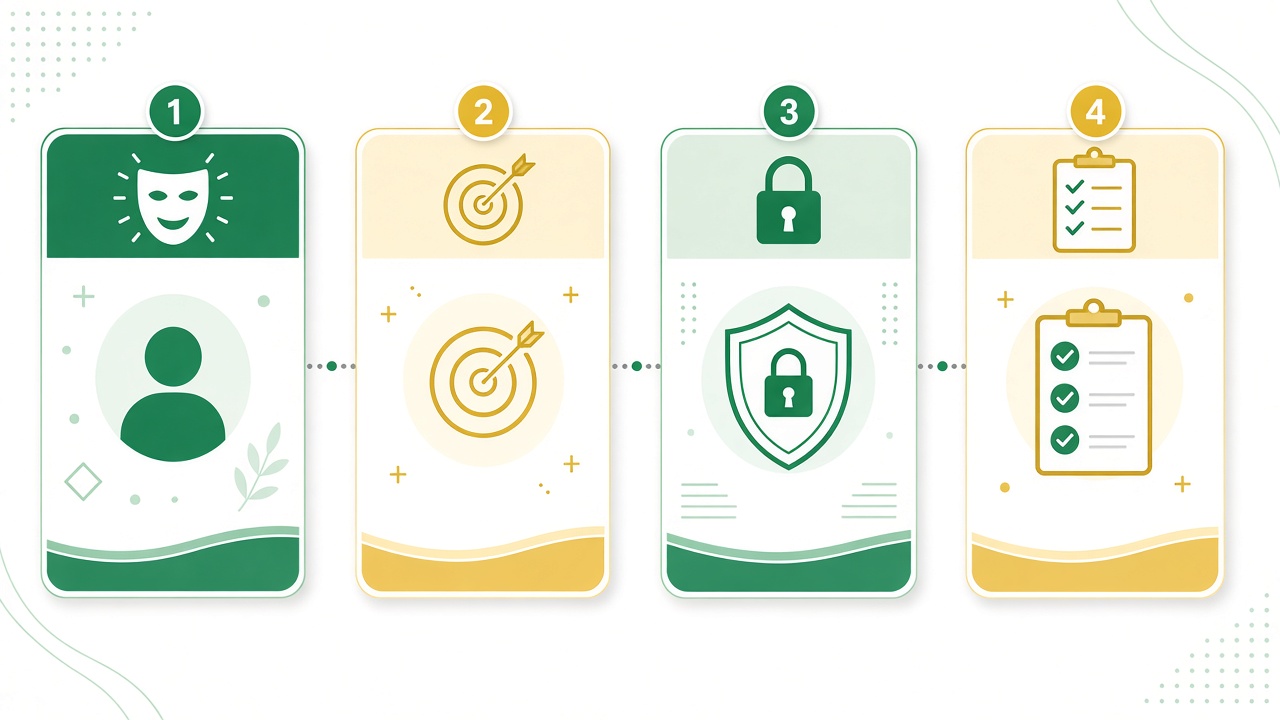
What Is Prompt Engineering?
The marketing team pasted the same vague request into ChatGPT every Monday — “write a newsletter” — and every Monday they spent an hour fixing tone, length, and hallucinated stats. One afternoon they added four lines specifying audience, word count, and a bullet format. The model did not get smarter; their prompt engineering course-free moment did.
Prompt engineering is the craft of writing instructions that get reliable results from large language models. A free prompt engineering course should teach patterns you can reuse — not magic words. Master roles, constraints, examples, and output formats, then evaluate results.
Why prompt engineering course free Matters
Coursera and DeepLearning.AI own branded course searches; long-tails like prompt engineering course free and prompt engineering tutorial still reward practical guides with examples and FAQs.
The Story Behind prompt engineering course free
Why vague prompts fail in production
Prompt engineering is not about tricking a model with secret keywords. It is the craft of writing instructions that define success clearly enough that another human could grade the output. When prompts fail, the failure mode is almost always under-specification: missing audience, missing constraints, or missing format.
Free prompt engineering courses should teach patterns you can reuse across models — not screenshots of clever one-liners. The patterns that survive model upgrades are structural: who the model is, what it must do, what it must not do, and how the answer should look.
Treat every prompt like a mini product spec. If you cannot describe what “done” looks like in one sentence, the model will guess — and guessing is where hallucinations and rework live.
Core patterns: from baseline to few-shot
Start with a baseline prompt for a task you perform weekly — status updates, code reviews, lesson plans, customer replies. Run it once and capture what went wrong. That failure log becomes your curriculum.
Add a role and explicit success criteria next. “You are a senior editor” is weak alone; “You are a senior editor who preserves factual claims and cuts fluff to 120 words” is actionable. Success criteria turn subjective taste into checklists the model can follow.
Few-shot examples beat abstract adjectives for stylistic tasks. Show two or three input/output pairs that represent “good.” The model interpolates style and structure more reliably than it interprets “make it professional.”
For reasoning tasks, chain-of-thought can help when you need intermediate steps — but it adds tokens and latency. Use it when mistakes are costly; skip it when a lookup or template suffices.
- Role + task + audience + constraints + format
- Two to three few-shot examples for style-heavy work
- Structured outputs (JSON, tables) for tool pipelines
- Regression set of ten prompts before you “ship” a template
Structured outputs and evaluation discipline
Workflows break when models return prose and your automation expects JSON. Force structure in the prompt — keys, types, allowed enums — and reject malformed answers in code or with a repair pass. Structured outputs are how prompt engineering connects to agents and integrations.
Evaluation separates hobby prompting from professional work. Build a rubric: format compliance, factual checks, tone, and safety. Spot-check ten outputs, not one lucky reply. Save version history: prompt v1, v2, v3, and what changed.
When a provider releases a new model, rerun your regression set. Prompt engineering course-free does not mean “set and forget.” It means you own a test suite the way engineers own unit tests.
Practice loop: iterate like a product owner
Copy the skeleton below into your notes app and fill the braces for each task. Keep winners in a prompt library tagged by use case — support, coding, study, research. Share libraries with teammates so quality compounds.
Common mistakes: one giant paragraph with no format, no examples for stylistic tasks, accepting the first answer, and chain-of-thought on simple lookups. Fix those and you are ahead of most certificate collectors.
Continue on Sturdee’s Prompt Engineering skill path and /learn/prompt-engineering for structured drills. Use Practice Coach on Pro when you want graded feedback on constraint-following and format compliance.
Core Prompt Patterns
- Role + task + constraints + format
- Few-shot examples beat abstract instructions
- Chain-of-thought for reasoning tasks (when helpful)
- Structured outputs (JSON, tables, checklists) for tools
- Evaluation: rubrics, spot checks, and regression prompts
How to Practice Prompt Engineering Free
- Write a baseline prompt for a real task you do weekly
- Add a role and success criteria
- Add 2–3 few-shot examples of good outputs
- Force a structured format (bullets or JSON)
- Save a regression set of 10 prompts and retest after changes
Structured Prompt Template
You are a {role}.
Task: {goal}
Audience: {who}
Constraints: {limits}
Format: {structure}

Examples:
Input: ...
Output: ...

Now complete the task for:
{user_input}
Common prompt engineering course free Mistakes
- One giant vague prompt with no format
- No examples when the task is stylistic
- Accepting the first answer without checks
- Overusing chain-of-thought for simple lookups
Continue on Sturdee’s Prompt Path
Open the Prompt Engineering skill path and /learn/prompt-engineering. Use Practice Coach on Pro when you want graded drills.
Takeaways — What to Do Next
A free prompt engineering course succeeds when you leave with patterns, not parlor tricks: specify success, show examples, force structure, and evaluate with a regression set. Models will keep improving; specification and measurement remain your durable edge.
Prompt Engineering Course — FAQ
Frequently Asked Questions
Is this prompt engineering course really free?+
The Sturdee skill path and this tutorial are free to read. AI-powered practice drills require Sturdee Pro.
Does prompt engineering still matter with better models?+
Yes. Clearer instructions still reduce errors, control tone, and produce structured outputs for workflows — especially at scale.
How is this different from ChatGPT tips lists?+
Tips are one-offs. A course teaches reusable patterns, evaluation, and iteration — skills that transfer across models.
How many examples belong in a few-shot prompt?+
Often two or three diverse examples are enough. More examples help noisy tasks but increase token cost; trim once quality plateaus.
Should I put instructions in the system or user message?+
Put stable rules in the system message when the API supports it; put task-specific input in the user message. Keep one source of truth to avoid contradictions.
Continue learning interactively
/learn/prompt-engineering →